Diaphragms for all Industries
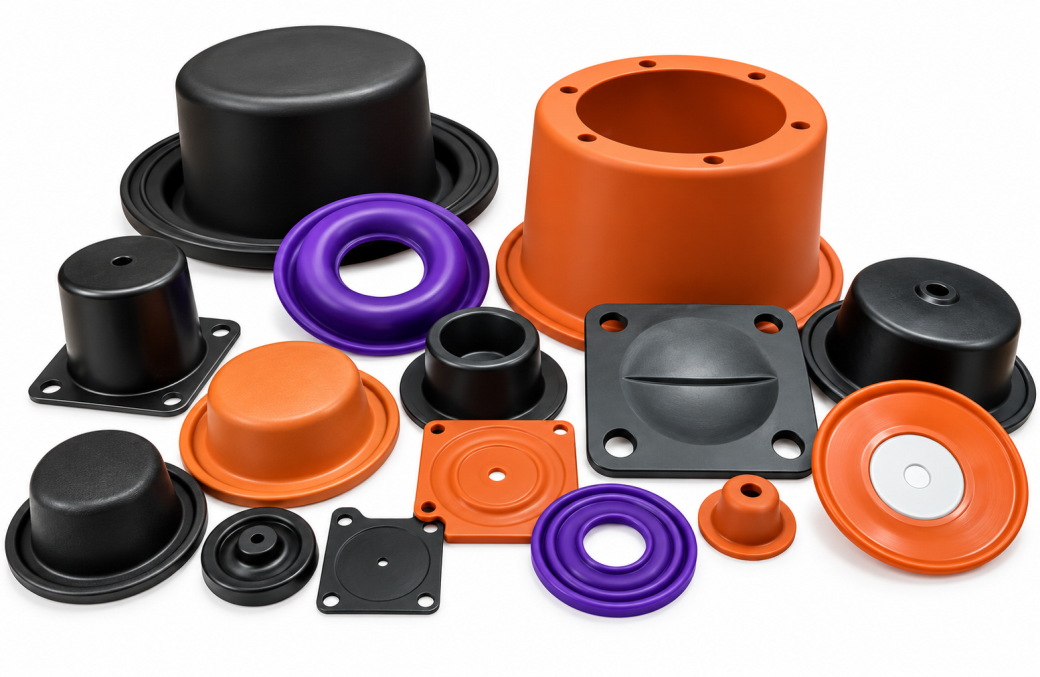
High-performance elastomer diaphragms and custom sealing solutions engineered to deliver precise fluid power and pressure control across demanding global industries. Designed for high cycle life, chemical resistance, and strict regulatory compliance, serving critical sectors including automotive, aerospace, pneumatics, commercial appliances, and potable water, as well as petrochemical, gas, and propane distribution.
Used in vital applications such as control valves, actuators, pressure regulators, switches, positive displacement pumps, and thermal expansion chambers.
If you are looking to design in a new diaphragm or increase the lifespan of your existing designs, please get in touch and we will advise how we can support.
Standard Designs
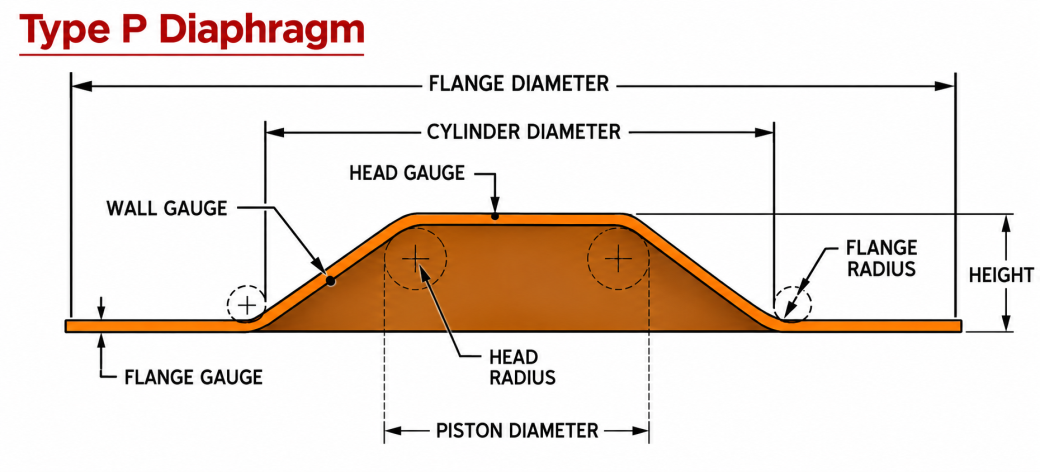
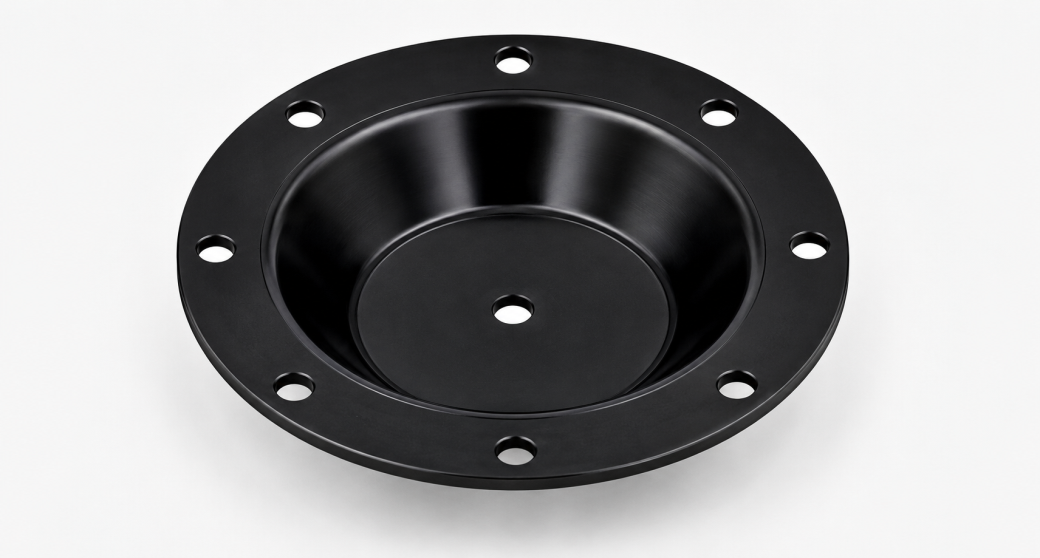
This diaphragm type, commonly referred to as dish-shaped, has a sidewall that slopes gradually from the cylinder to the piston. This diaphragm is designed to be flexed in both directions to its full height. It may be double-coated to take pressure in both directions. Due to its wide convolution and gradual sidewall slope, the total travel and ability to withstand high pressures are limited. The effective pressure also varies through its stroke.
The Type F is commonly referred to as the "top hat" diaphragm. It exhibits all of the benefits that are associated with rolling diaphragms. These diaphragms have the longest stroke-to-bore ratio, zero spring rate, no breakaway friction, constant effective pressure area, and long lifespan.
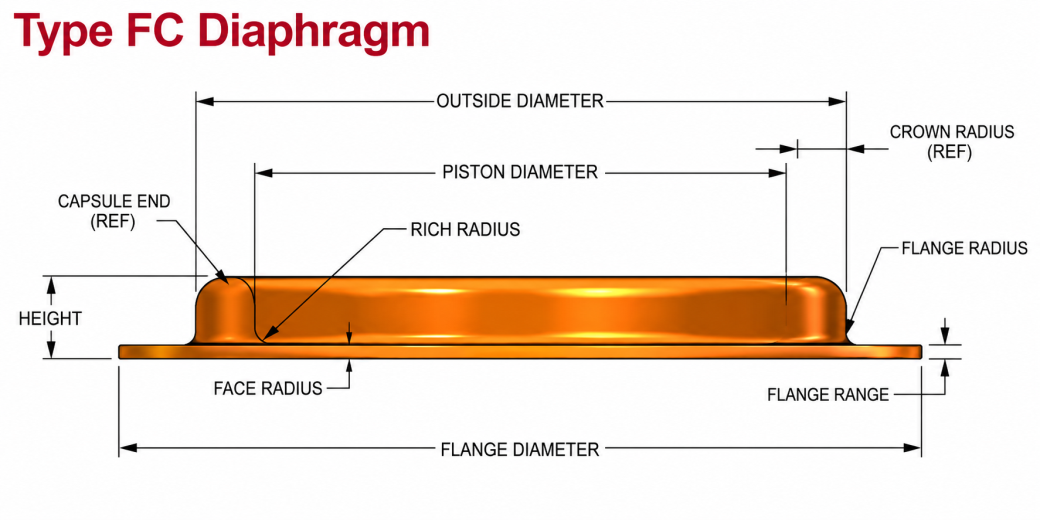
In this style, the piston and the flange are molded on the same plane. The benefit of this style is that the handwork of forming the convolution is eliminated, which greatly reduces the assembly time. This would be of importance in high volume applications. The drawbacks to this type of diaphragm are: a built-in spring rate due to the molded-in convolution, which must be considered during the design stage and a limited stroke-to-bore ratio. To improve this ratio, an offset preconvoluted diaphragm can be designed (see FC Offset figure at bottom of page). In this shape, the piston head and flange are molded offset to each other, thereby putting all the additional stroke capabilities on one side of the convolution. This provides a longer stroking diaphragm, which still maintains the assembly ease of a preconvoluted diaphragm.
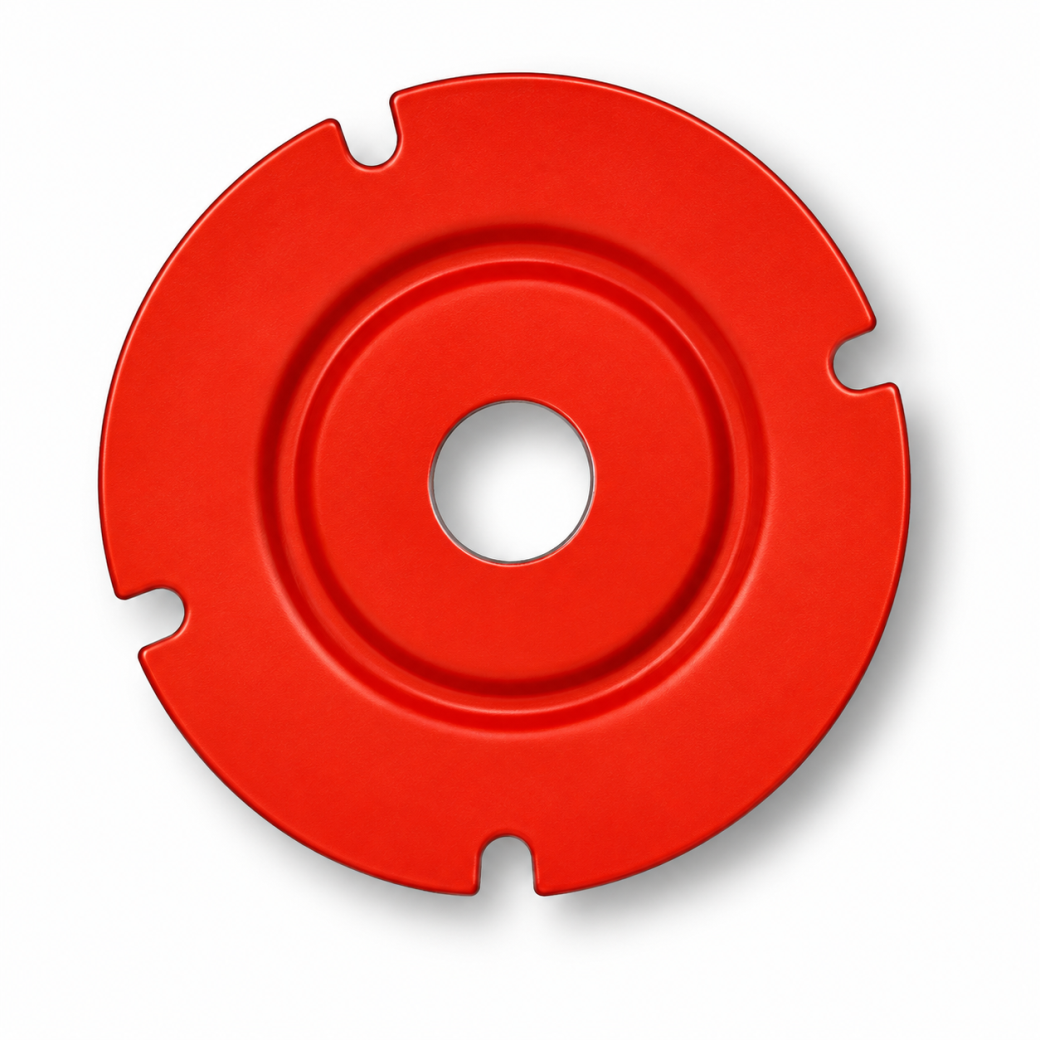
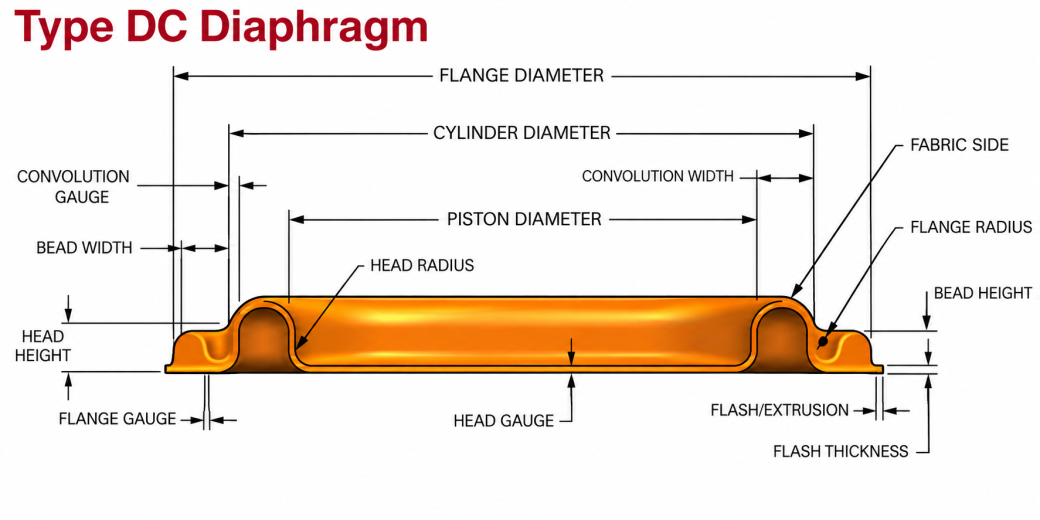
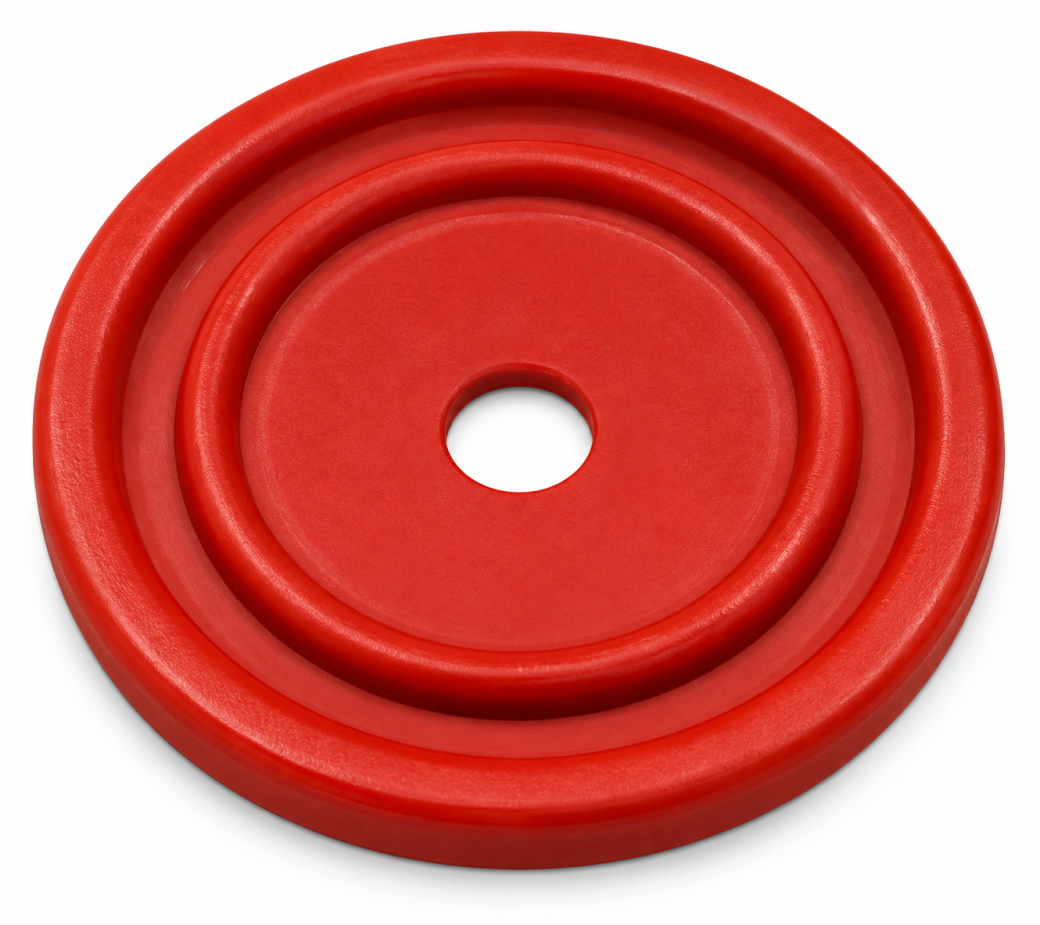
This style diaphragm is the same as the Type F in all respects except flange mounting. The parts are molded with what equates to half of an O-ring on the flange rather than a large flat surface. This O-Ring half fits into a groove machined into the cylinder half of the hardware. Sealing is achieved by squeezing the bead into a properly sized groove (see table at bottom of page). The cylinder and bonnet can then be designed to make positive contact when assembled, eliminating the need for a closely controlled assembly torque. It also reduces the overall diameter of the diaphragm, reducing the hardware diameter.
Type O
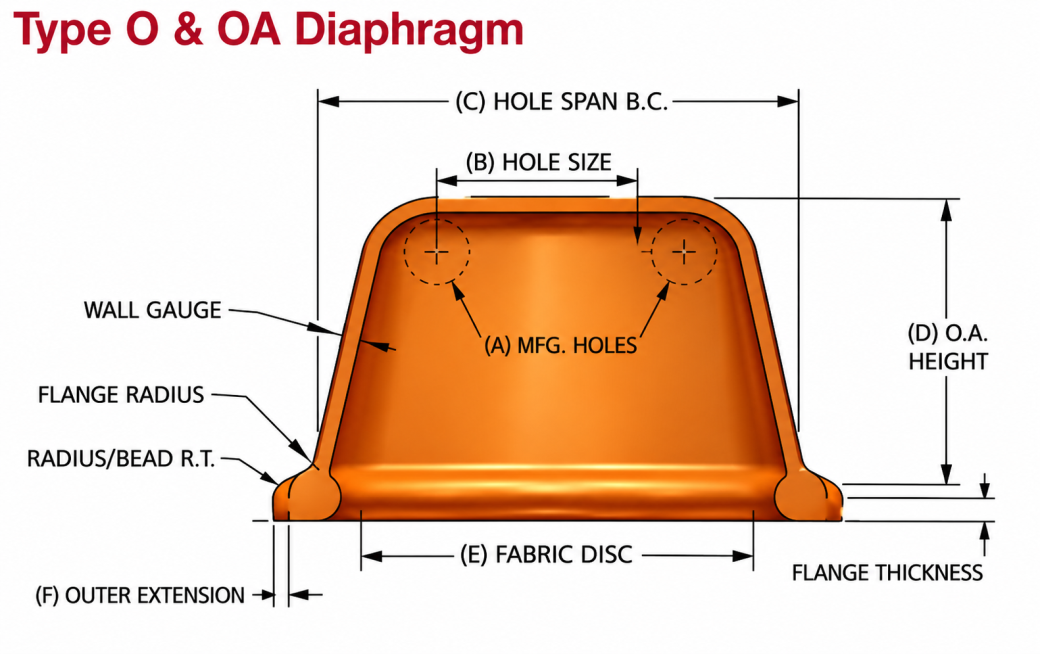
This type of diaphragm has no flange. An O-ring is molded to the bottom of the sidewall. Unlike the other types of diaphragms, the Type O is put into convolution by folding the sidewall back onto itself. The bead is then squeezed into a groove machined into the bonnet half of the hardware. This type enables the greatest reduction in hardware diameter, while keeping a full stroke potential.
Type OA
This diaphragm type is second generation to the Type O. It fits into identical hardware. It differs from the Type O in that its sidewall attaches to the inside diameter of the O-ring and the fabric is on the outside, requiring the head corner radius to be inverted for installation. The Type OA tends to be easier to install but basically the difference is a personal preference.
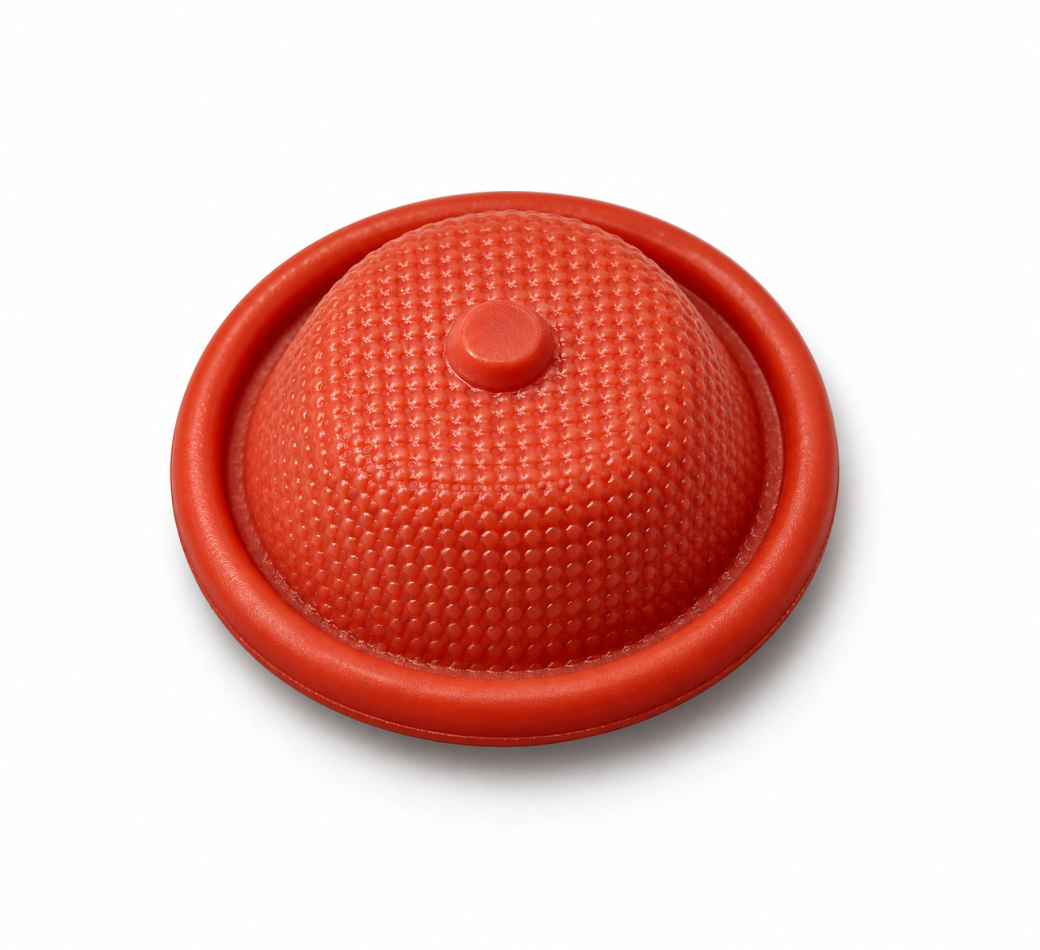
This style diaphragm is similar in function to the Type FC Diaphragm, while the sealing and hardware designs are the same as the Type D Diaphragm.