Sealing solutions for drug delivery devices
Sealing Solutions for Drug Delivery Devices
Drug delivery devices require precision-engineered sealing solutions to ensure accurate dosing, contamination control, and patient safety. From inhalers and injectors to advanced wearable devices, seals play a critical role in maintaining reliability and performance in life sciences applications.
Ashton Seals provides high-quality sealing solutions designed to meet the strict demands of medical, pharmaceutical, and biotechnology industries.
Why Sealing Is Critical in Drug Delivery Devices
Sealing components are essential in drug delivery systems to:
- Prevent leaks and ensure accurate dosing
- Maintain sterility and contamination control
- Withstand repeated use and mechanical stress
- Deliver consistent performance over time
Modern drug delivery technologies, including smart and ingestible devices, require highly reliable components to ensure targeted and effective treatment delivery
Failure of sealing systems can compromise patient safety, product integrity, and regulatory compliance.
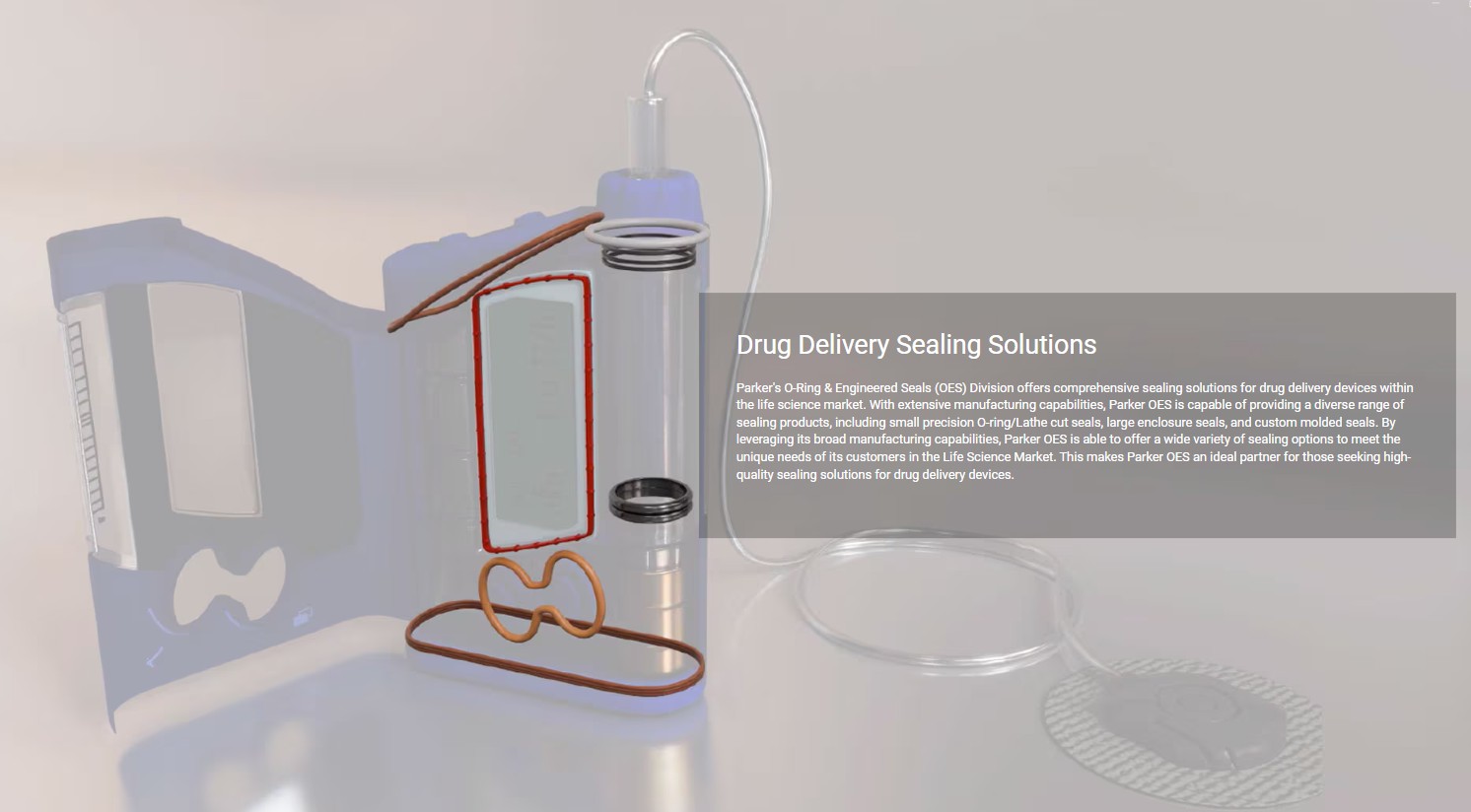

Click here to view the brochure: Sealing solutions for drug delivery systems
Applications in Drug Delivery Systems
Our sealing solutions are used in a wide range of drug delivery devices, including:
- Auto-injectors and syringe systems
- Inhalers and respiratory devices
- Infusion pumps and wearable drug delivery systems
- Diagnostic and laboratory equipment
These applications demand precision, reliability, and compliance with strict regulatory standards.
High-Performance Sealing Solutions
We supply a wide range of sealing products suitable for drug delivery applications, including:
- Elastomer Seals & O-Rings
- Designed for flexibility and sealing integrity in compact devices, with materials selected for biocompatibility and durability.
- PTFE Seals
- Ideal for applications requiring low friction, chemical resistance, and high purity, ensuring smooth operation and minimal contamination risk.
- FEP Encapsulated Seals
- Provide the chemical resistance of PTFE with the elasticity of elastomers, making them suitable for aggressive media and sensitive environments.
Custom Engineered Seals
Tailored solutions for complex drug delivery systems, ensuring optimal performance in miniaturised or high-precision devices.
Materials for Medical & Pharmaceutical Applications
Materials used in drug delivery sealing solutions must meet strict regulatory and performance requirements. Typical materials include:
- Silicone (VMQ) – excellent biocompatibility and flexibility
- EPDM – suitable for sterilisation processes
- FKM / FFKM – high chemical and temperature resistance
- PTFE – exceptional purity and low friction
These materials are selected to ensure:
- Compliance with FDA and USP Class VI standards
- Low extractables and leachables
- Compatibility with sterilisation processes (CIP/SIP)
Design Considerations for Drug Delivery Seals
When selecting seals for drug delivery devices, key factors include:
- Biocompatibility and regulatory compliance
- Compatibility with active pharmaceutical ingredients (APIs)
- Resistance to sterilisation and cleaning processes
- Precision fit for miniaturised components
- Long-term durability and wear resistance
Careful design ensures consistent performance and patient safety in critical applications.
Why Choose Ashton Seals?
- Extensive experience in life sciences and medical sealing
- Access to FDA-compliant and USP Class VI materials
- Custom-engineered solutions for complex applications
- Expert technical support from concept to production
We work closely with manufacturers to deliver reliable, compliant, and high-performance sealing solutions.
Request a Quote
Need help choosing the right seals?
Email: ask@ashton-group.co.uk
Call: +44 (0) 1226 273700
FAQ
1. What types of seals are used in drug delivery devices?
Drug delivery devices commonly use elastomer O-rings, PTFE seals, and FEP encapsulated seals, selected for their precision, biocompatibility, and reliability in medical applications.
2. Why are seals important in drug delivery systems?
Seals are critical to prevent leaks, ensure accurate dosing, and maintain sterility, helping to protect patient safety and product integrity.
3. What materials are used in medical sealing solutions?
Typical materials include silicone, EPDM, PTFE, FKM, and FFKM, chosen for their biocompatibility, chemical resistance, and ability to withstand sterilisation processes.
4. What does FDA and USP Class VI compliance mean for seals?
FDA compliance ensures materials are safe for food and pharmaceutical contact, while USP Class VI certification confirms biocompatibility for medical applications.
5. How do you choose the right seal for a drug delivery device?
The right seal depends on device design, compatibility with the drug, sterilisation requirements, and regulatory standards, making expert selection essential.